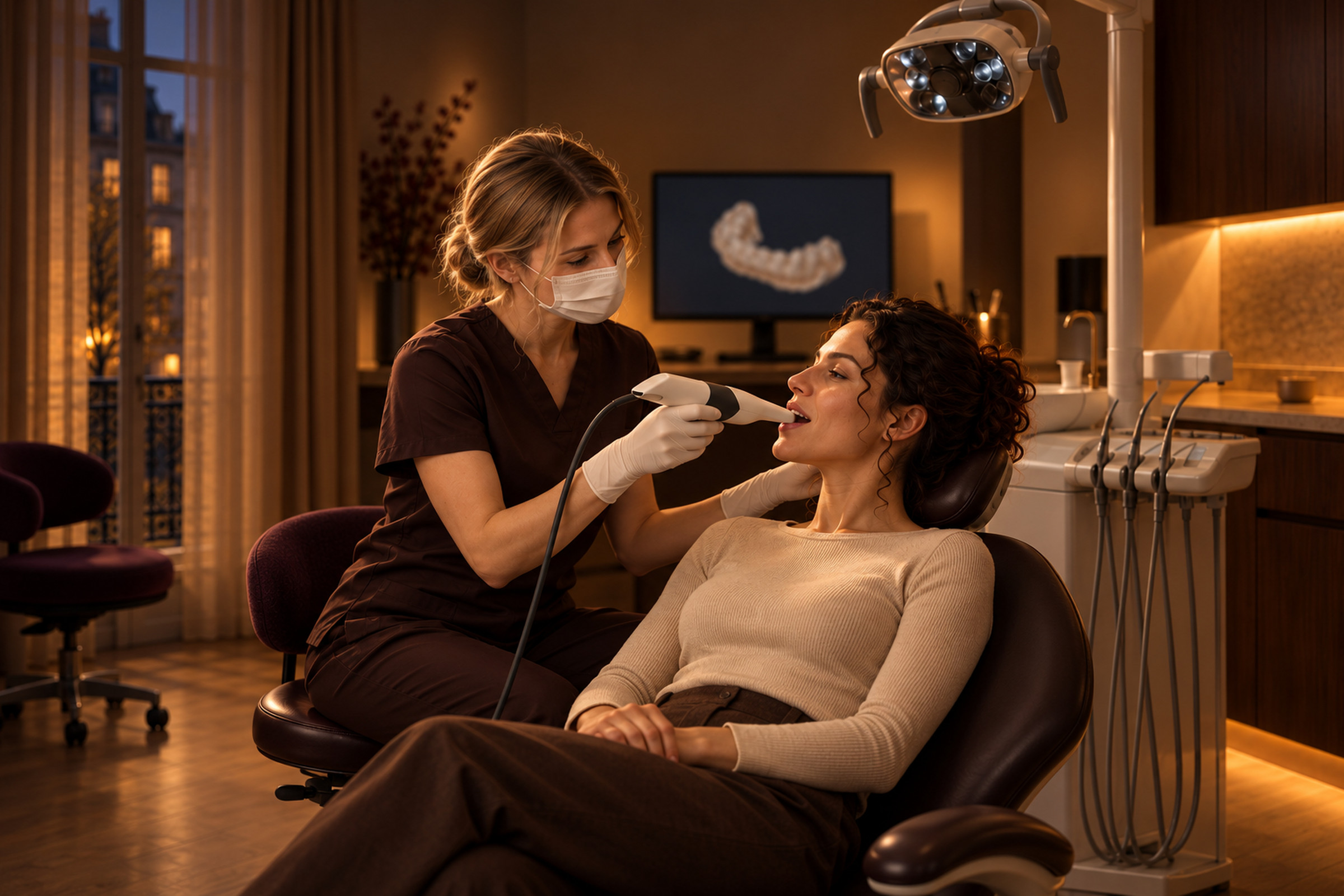
Intraoral scanners have replaced traditional impressions for most treatments. What does that mean for you in the chair?
For decades, impressions meant a tray of paste held in the mouth for several minutes. Today most of our planning starts with an intraoral scanner: a small wand that records a precise 3D model of your teeth in a few minutes.
More comfortable, more precise
Scanning is quicker and more comfortable than impressions, especially for patients with a strong gag reflex. Because the model is digital, it can be checked immediately and rescanned in seconds if anything is missing.
Seeing the plan before it happens
A digital model lets us plan treatment in detail and show you what is proposed. For aligners we can preview the planned tooth movement; for cosmetic work we can simulate changes in shape and length; for implants the scan is combined with imaging to plan a precise position.
- Fewer remakes and adjustments
- Clearer explanations at every step
- A permanent record to compare over time
Technology does not replace clinical judgement, but it gives both you and your clinician a clearer picture before any treatment begins.